When meeting minutes are created with AI, sensitive content is often processed: sessions of municipalities, conversations in schools, customer appointments, executive meetings, personnel matters, or internal project discussions.
Therefore, it is not enough to just ask whether an AI creates good summaries.
The more important question is:
Where are our data processed and who has access to them?
We answer exactly this question transparently at Meeting Metrics.
Why meeting data is particularly sensitive
Meetings often discuss information that is not intended for the public:
- internal decisions
- personnel data
- customer data
- project information
- financial topics
- confidential documents
- tasks and responsibilities
- political or organizational assessments
Depending on usage, Meeting Metrics generates various data from a meeting: audio, transcript, speaker assignment, summary, tasks, decisions, and exports.
Therefore, data protection is not an add-on topic for meeting software. It is a central part of the product.
Standard setup and Enterprise: The important difference
Meeting Metrics can be operated differently depending on the subscription and customer requirements.
For many users, the standard plans are sufficient. Depending on configuration, external AI services can also be used for certain processing steps.
However, for organizations with higher data protection requirements, we offer Meeting Metrics Enterprise.
Enterprise is particularly relevant for:
- municipalities and public administrations
- schools and universities
- companies with confidential customer data
- executive boards and supervisory boards
- organizations with internal data protection requirements
- teams with sensitive meeting content
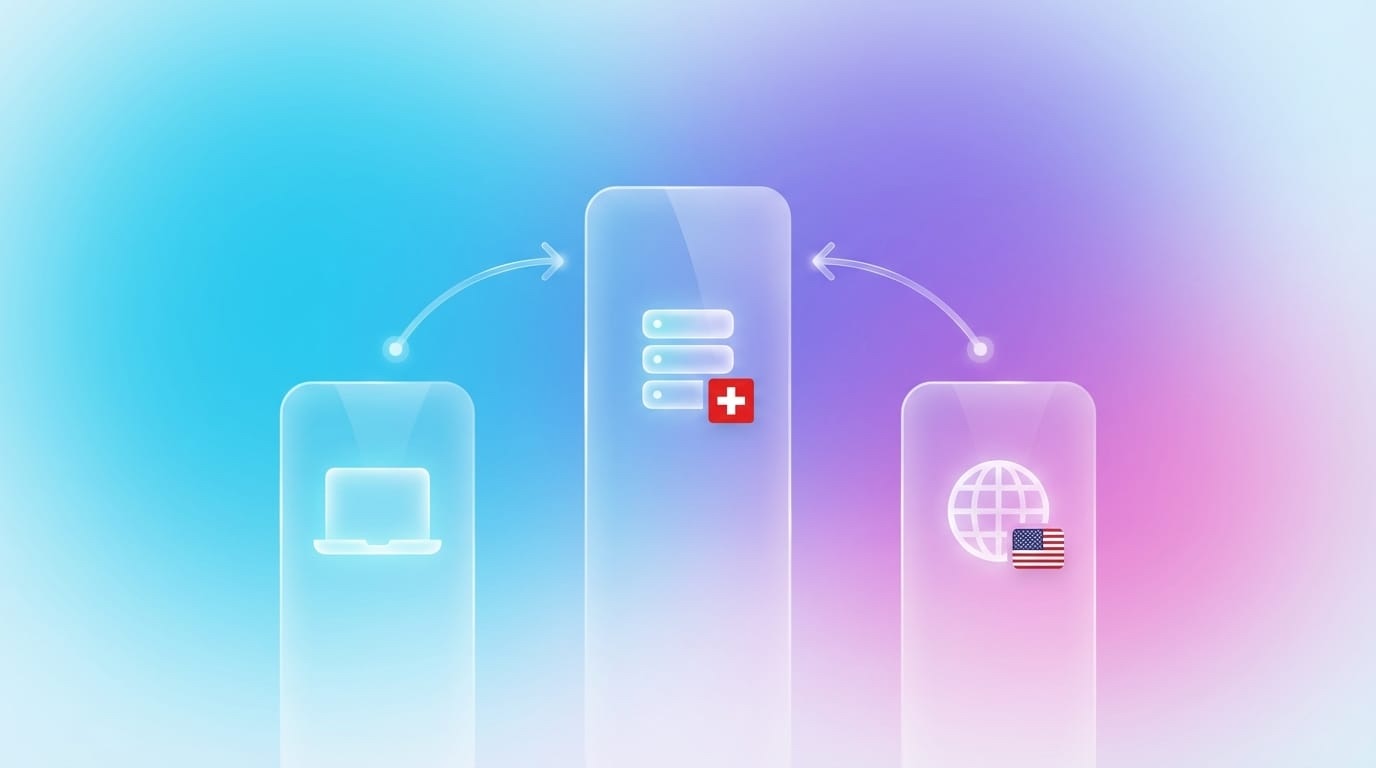
The most important difference: In the Enterprise setup, processing takes place entirely in Switzerland.
What does "processing in Switzerland" mean?
In Meeting Metrics Enterprise, the central processing steps are carried out in Switzerland.
These include:
- hosting in Switzerland
- storage of data in Switzerland
- encrypted backups in Switzerland
- transcription in Switzerland
- speaker recognition in Switzerland
- AI processing with local models in Switzerland
This means: Meeting content does not have to be sent to external AI providers abroad for Enterprise processing.
External AI providers such as OpenAI, Google Gemini, or Anthropic are not activated in the Enterprise setup unless separately reviewed, contractually regulated, and explicitly approved.
Are customer data used for AI training?
No.
Customer data are not used by Meeting Metrics for training, retraining, fine-tuning, or improving own or third-party AI models.
This is especially important because meeting content often contains confidential information. Companies, schools, and municipalities use Meeting Metrics to better document their conversations, not to provide their data for training purposes.
Who has access to the data?
Access to Meeting Metrics is role- and team-based.
This means: users only see content they are authorized to access. Content can be assigned to their own meetings, a team, or explicit shares.
This is important for organizations because not every meeting has the same protection needs. A public project meeting is not the same as a personnel discussion, an executive meeting, or a confidential municipal council meeting.
Meeting Metrics therefore supports:
- team and role rights
- controlled sharing
- protected access
- export options depending on permissions
- administrative access based on the need-to-know principle
This makes it clearly controllable who may see, edit, export, or share which content.
What happens to audio, transcript, and summary?
An important point: Not every piece of information needs to be kept permanently or widely shared.
Depending on the organization, it can be defined how to handle the different levels of a meeting:
- audio recording
- transcript
- speaker assignment
- summary
- tasks
- decisions
- export as PDF, Word, Markdown, or text
Many organizations, for example, do not want to share the full transcript but only a reviewed protocol or a task list.
This makes sense. Good meeting documentation does not mean storing everything to the maximum, but making relevant information usable in a controlled way.
Deletion, export, and retention
Meeting Metrics supports exporting content and deleting individual meetings within the framework of product and permission logic.
After contract termination, personal data can be returned or deleted according to contractual agreements. Productive content data are deleted within reasonable periods after contract termination, provided no legal retention obligations oppose this.
This is important for organizations because data protection does not start only at recording. It covers the entire data lifecycle:
- creation
- processing
- access
- sharing
- export
- retention
- deletion
Is there an on-premise option?
Yes, for organizations with particularly high requirements, an on-premise or dedicated setup can be considered.
This can be relevant, for example, for larger companies, public organizations, or heavily regulated areas when data flows, infrastructure, or internal guidelines impose special requirements.
On-premise is not necessary for every use case. But it is important that this option exists if an organization needs it.
What do Enterprise customers get specifically?
Meeting Metrics Enterprise is aimed at organizations that want to use AI for meetings professionally and with data protection awareness.
Enterprise includes in particular:
- processing entirely in Switzerland
- Swiss hosting and data storage
- transcription in Switzerland
- speaker recognition in Switzerland
- local AI processing in Switzerland
- no external AI providers without separate approval
- no use of customer data for AI training
- role- and team-based access rights
- controlled sharing and exports
- encrypted backups in Switzerland
- deletion and export options
- AVV and security documents on request
- optional review of on-premise or dedicated setups
Who is Enterprise suitable for?
Enterprise is particularly suitable when meetings regularly contain sensitive or confidential content.
Typical examples:
- municipal council meetings
- school and university meetings
- executive and supervisory board meetings
- customer conversations
- project and escalation meetings
- HR-related discussions
- internal strategy or financial meetings
In such cases, it is not just about saving time. It is also about using AI in a way that ensures data protection, control, and traceability.
Conclusion
AI can make meeting documentation significantly more efficient. But sensitive meetings require more than just a good summary.
Organizations should know:
- Where is the data stored?
- Where does AI processing take place?
- Are external AI providers used?
- Are data used for training?
- Who has access?
- How can content be deleted or exported?
- Is there a solution for higher security requirements?
Meeting Metrics Enterprise was developed precisely for these questions.
For companies, schools, and municipalities, this means: AI-supported meeting documentation with processing in Switzerland, clear access rights, controlled data flows, and optional setups for increased requirements.