Meeting Metrics is an AI software that automatically transcribes meetings, summarizes them in a structured way, and directly creates actionable to-dos.
Depending on the requirements, various deployment options are available. These include the Swiss cloud as well as enterprise setups in the cloud or on-premise.
New tools like Talat rely on purely local processing. Others like Otter.ai or Fireflies use US cloud servers.
This article compares the main approaches in a practical and honest way.
The key points in brief
• Four approaches dominate the market: local, Swiss cloud, on-premise, and US cloud
• Local processing offers maximum privacy but limited AI quality
• Swiss cloud combines strong AI with data sovereignty
• On-premise provides maximum control for regulated industries
• US cloud scores with features but brings CLOUD Act risks
• Meeting Metrics offers both cloud and on-premise options, including enterprise setup
The trend: privacy-first transcription
More and more tools process audio directly on the device without cloud and without data transfer.
The driver is clear: companies want to know where their sensitive conversation data ends up.
Data protection is evolving from a nice-to-have to a real purchasing criterion.
Four approaches compared
Local on the device
How it works
An AI model runs directly on your computer. No data leaves the device.
Examples
Talat, MacWhisper, Granola
Advantages
• Maximum privacy
• Works offline
• No ongoing cloud costs
• No dependency on third parties
Disadvantages
• Limited AI quality due to hardware limits
• Less precise summaries
• High hardware requirements
• No team features
• Weak speaker recognition
Swiss Cloud
How it works
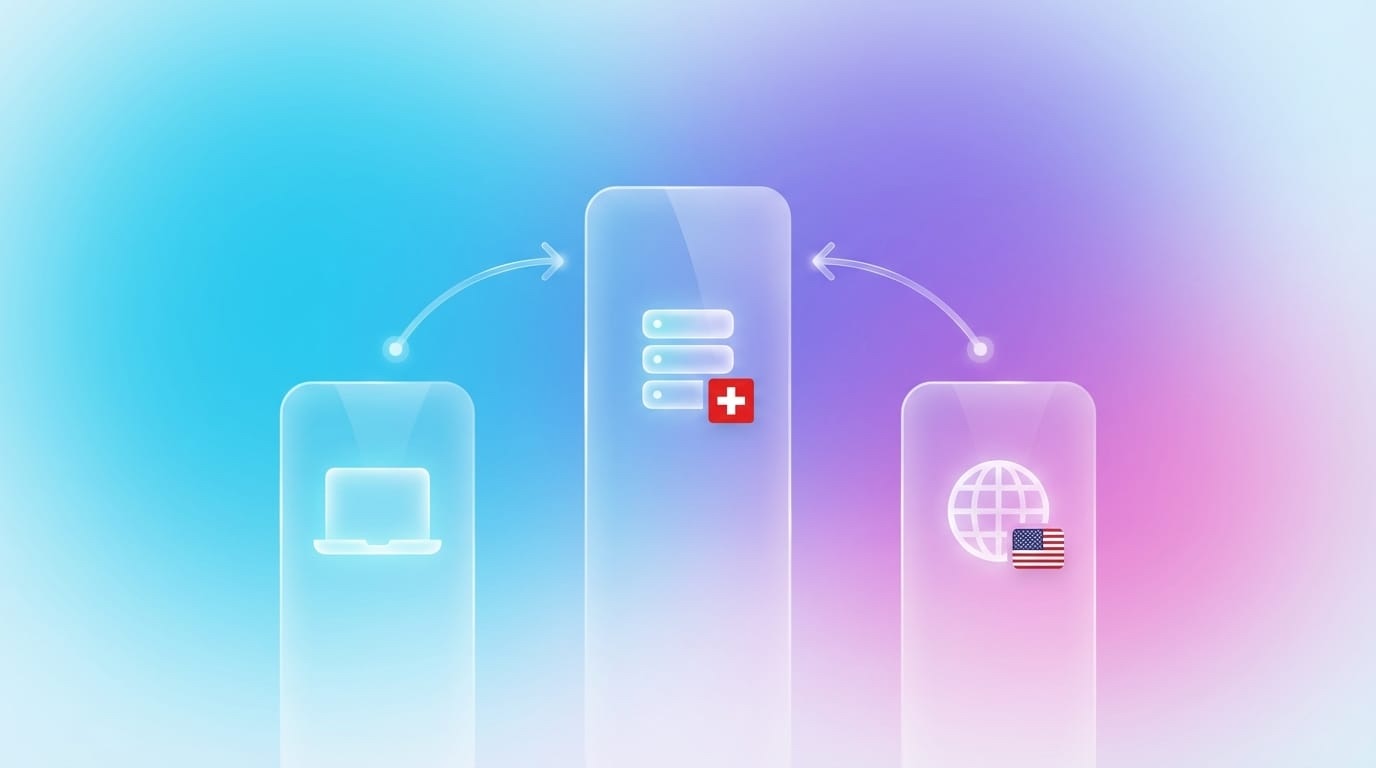
Audio is encrypted and sent to servers in Switzerland where it is processed.
Examples
Meeting Metrics
Advantages
• Strong AI models without hardware effort
• GDPR-compliant and no CLOUD Act risk
• Team features, synchronization, and mobile app
• Good speaker recognition
• Works on any device
Disadvantages
• Data leaves the device but remains in Switzerland
• Internet connection required
• Ongoing costs
On-Premise
How it works
All processing runs on your own infrastructure within the company.
Examples
Meeting Metrics Enterprise
Advantages
• Maximum control over all data
• No data transfer externally
• Own security policies enforceable
• Ideal for regulated industries like banks or authorities
• No dependency on third parties
Disadvantages
• Higher initial costs
• IT operation necessary
• Scaling effort
• Longer implementation
US Cloud
How it works
Audio is sent to servers in the USA or global infrastructure and processed there.
Examples
Otter.ai, Fireflies, tl;dv, Microsoft Copilot
Advantages
• Large selection of features and integrations
• Often cheap or free plans
• Rapid innovation
Disadvantages
• CLOUD Act allows access by US authorities
• GDPR compliance not guaranteed
• Unclear data usage for training
• Bots often appear visibly in meetings
When which approach fits
Local fits if you work alone and want maximum privacy
Swiss cloud fits if you work in a company, data protection is important, and you want to start quickly
On-premise fits if you are in a regulated industry and no data may leave the network
US cloud fits if data protection is not a priority and you need maximum integrations
Meeting Metrics: flexible deployment options
Meeting Metrics offers several options depending on requirements:
Swiss Cloud
Servers in Switzerland, ready to use immediately, from CHF 29 per month
Enterprise in the Cloud
Dedicated environment with extended security requirements, operated in Switzerland
On-Premise
Complete processing on own infrastructure without external dependencies
Hybrid approach
Local recording without bot, processing optionally in the cloud or on-premise
Difference between cloud and on-premise
In the cloud, Meeting Metrics operates the infrastructure in Switzerland.
In the on-premise setup, your company operates the entire solution itself.
Both variants are GDPR-compliant.
On-premise additionally offers maximum control and independence.
What the trend means
The market is clearly moving towards data protection.
Three developments are emerging
- Data sovereignty becomes a standard issue
- US providers come under pressure in Europe
- Flexible providers with multiple deployment options win
Conclusion: data protection is an architectural decision
The crucial question is no longer whether but how you implement data protection.
Local stands for maximum privacy
Swiss cloud for balance between AI and data protection
On-premise for maximum control
US cloud for maximum features
AI transcription saves massive time. The decisive factor is where the processing takes place and who has control.
About Meeting Metrics
Meeting Metrics helps you automatically transcribe meetings, summarize them, and directly convert them into tasks.
The solution works without bots, supports over 90 languages including Swiss German, and offers flexible deployment options from cloud to on-premise.
👉 Try 5 free transcriptions
Frequently Asked Questions
Is local transcription better than cloud?
Not generally. Local offers maximum privacy, cloud and on-premise deliver better AI results and features.
What does on-premise offer compared to cloud?
Full control over data, infrastructure, and security without external dependencies.
Who benefits from on-premise?
Regulated industries such as banks, insurance companies, authorities, or healthcare.
What does the CLOUD Act mean?
US authorities can request access to data from US companies, even outside the USA.
What is the best solution for Swiss SMEs?
In most cases, the Swiss cloud, as it combines strong AI, GDPR compliance, and quick start.