In Switzerland, there is a lot of talk about artificial intelligence. Many companies are testing AI tools, launching pilot projects, and exploring initial applications in everyday life.
At the same time, current Swiss reporting shows: there is often a gap between AI pilots and productive scaling.
Computerworld speaks of the Swiss AI dilemma. The GenAI Impact Report 2026 by adesso also shows that many companies experiment with AI but struggle to transition these projects into regular operations. According to adesso, 97 percent of surveyed companies rely on AI pilots, yet many fail to create productive applications with measurable business benefits.
Exactly here, Swiss SMEs face a simple question:
Where to start so that AI doesn’t just sound exciting but truly helps in everyday life?
One of the most pragmatic answers is: with meetings.
The Problem: AI Is Often Too Abstract
Many AI initiatives start with high expectations. Chatbots, automation, agents, internal knowledge databases, process optimization, new business models.
That sounds promising. In practice, however, it quickly becomes complex:
- Which data may be used?
- Who is responsible?
- How is the benefit measured?
- How is quality checked?
- How is data protection ensured?
- How does the result integrate into daily work?
- Who really continues to use the solution after the pilot?
Especially SMEs often lack the resources to build large AI programs over months. Therefore, use cases are needed that are manageable, understandable, and immediately usable.
Meeting transcription is exactly such a use case.
Why Meetings Are an Ideal Starting Point
Meetings take place in almost every organization. In SMEs, municipalities, schools, administrations, consulting firms, agencies, and industrial companies.
And in almost every meeting, work is generated:
- Decisions are made
- Tasks are assigned
- Customer requirements are discussed
- Project statuses are clarified
- Risks are identified
- Next steps are defined
- Knowledge is created that will be needed later
Nevertheless, documentation is often incomplete. Someone takes notes on the side. Minutes come late. Tasks end up in various tools. Important statements remain in private notes or disappear entirely.
This is not an abstract AI problem. This is a concrete everyday problem.
And that is exactly why meeting transcription is so well suited as the first productive AI use case.
The Workflow Is Clear
A good AI use case needs a clear process. With meeting transcription, this process is easy to understand:
- A meeting takes place.
- The conversation is recorded or an audio file is uploaded.
- The AI creates a transcript.
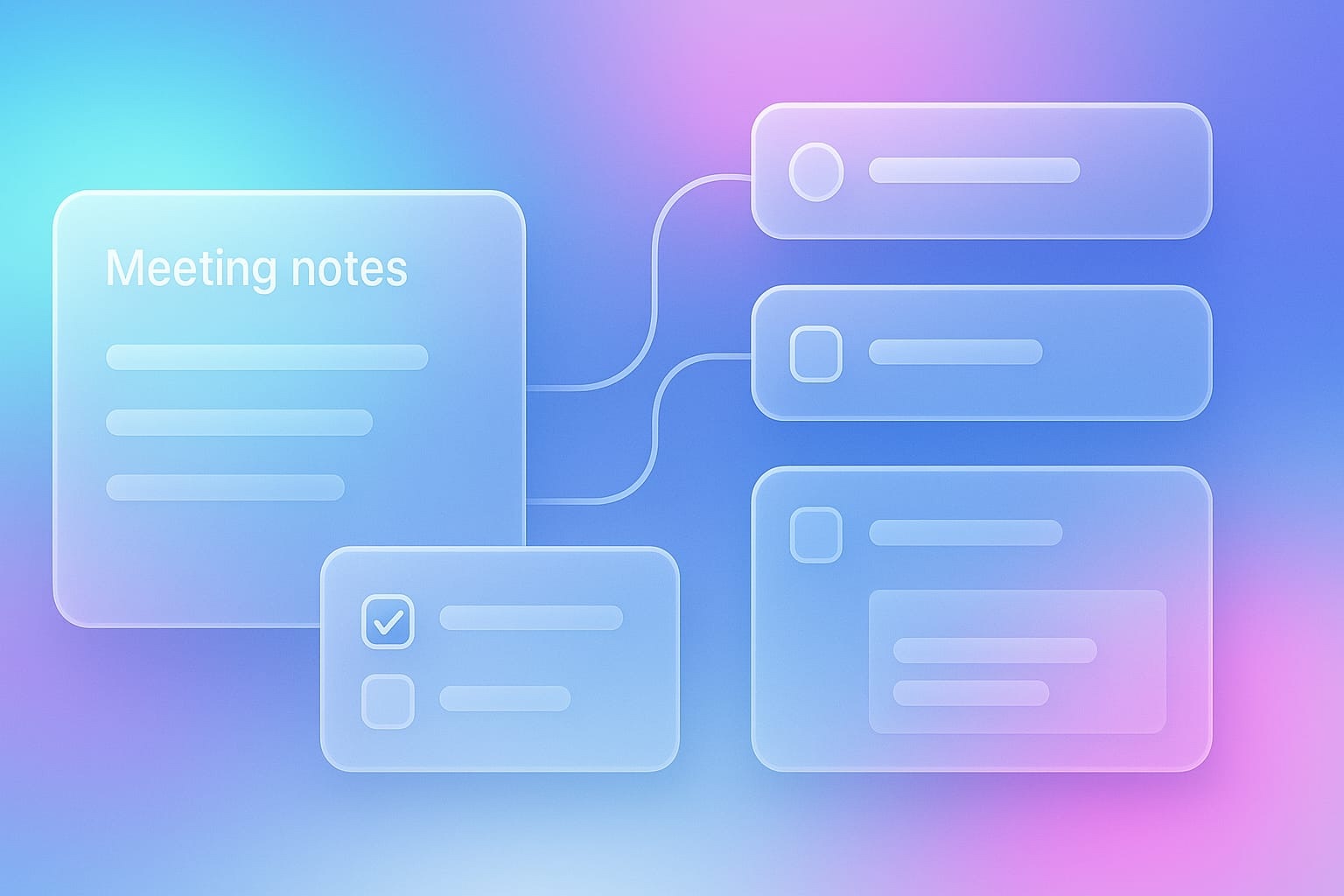
- From this, summaries, tasks, and decisions are generated.
- The responsible person reviews the result.
- The minutes are shared or exported.
This is not a loose experiment. It is a recurring process.
That is exactly what makes the difference. AI is not just tried out somewhere but embedded in an existing workflow.
The Benefit Is Measurable
Many AI projects fail because the benefit remains unclear.
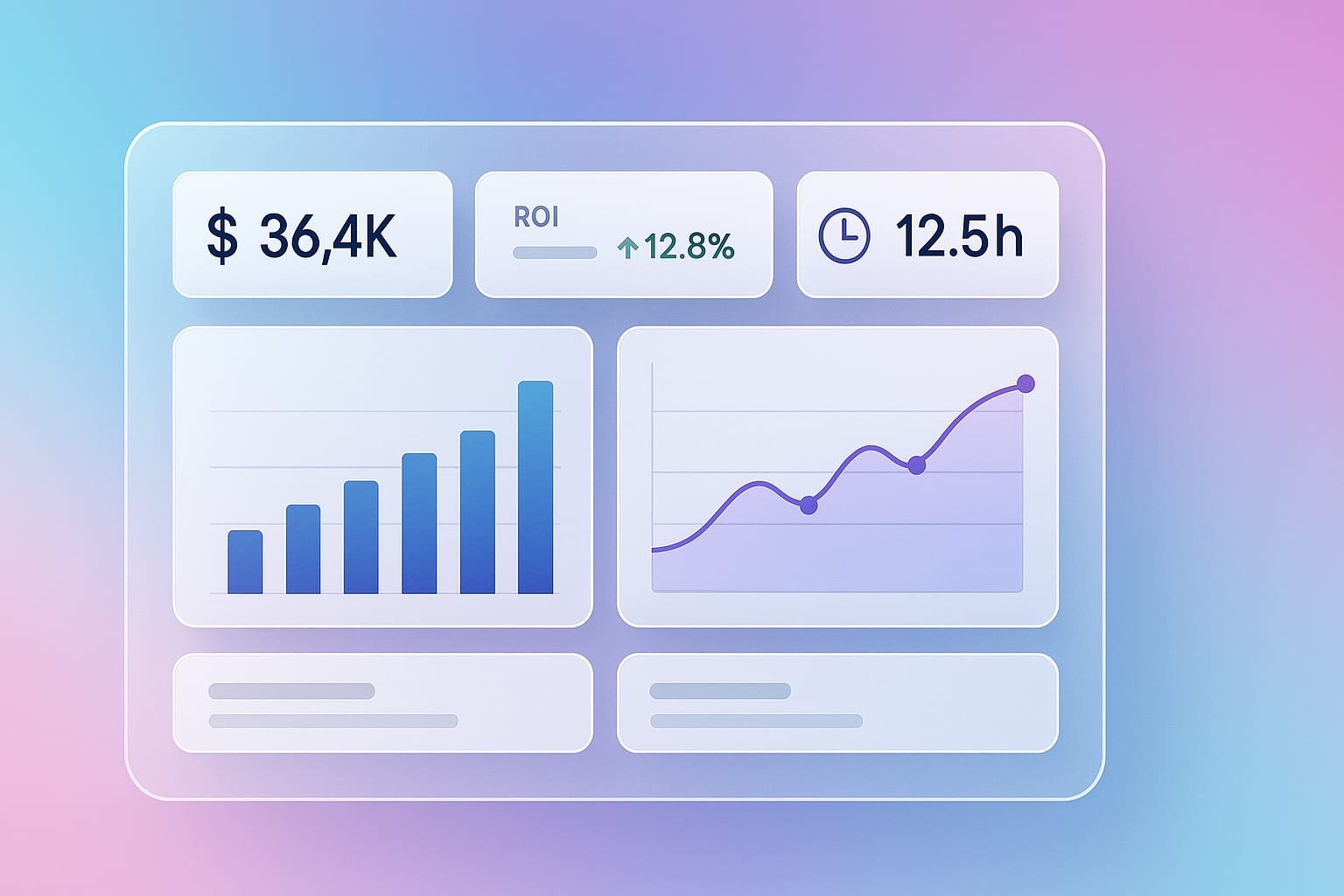
With meeting transcription, it is different. The effect can be measured quickly:
- How much time does minute-taking save?
- How quickly is the minutes available after the meeting?
- How many tasks are recorded more clearly?
- How often do decisions have to be reconstructed afterwards?
- How much less note-taking is needed during the meeting?
- How satisfied are meeting leaders and participants?
This is important for SMEs. An AI project must not only be technologically exciting. It must save time, create clarity, and make work easier in everyday life.
Meeting transcription often shows this benefit after just a few sessions.
The Data Is Controllable
Another reason why many AI pilots are not scaled: uncertainty about data protection.
With meeting transcription, the data is sensitive but well definable. An organization can clearly define:
- Which types of meetings may be recorded?
- Who must be informed?
- Who has access to audio, transcript, and minutes?
- Which content may be exported?
- How long are data stored?
- Which meetings are excluded?
- Is an enterprise setup with Swiss processing required?
This makes data protection concrete. Not as an abstract discussion about AI, but as a clear process around a specific use case.
Especially for Swiss SMEs, municipalities, and schools, this is a great advantage.
From Pilot to Everyday Life
A good AI pilot should not start with the question: Which AI is the most impressive?
The better question is:
Which process is frequent enough, clear enough, and useful enough for AI to really add value there?
Meetings meet these criteria.
They take place regularly. They involve many employees. They cause follow-up work. And they contain information important for projects, customers, teams, and decisions.
A pilot can therefore be set up very simply:
Week 1: Select Meeting Types
For example, project meetings, client appointments, or internal team meetings.
Week 2: Transcribe First Meetings
Don’t start with everyone at once, but with a small user group.
Week 3: Measure Quality and Time Savings
How good are the transcript, summary, tasks, and decisions?
Week 4: Define Rules and Roll Out
Which meetings are suitable? Who reviews the minutes? Where are they stored? Who has access?
This turns an AI test into a productive process.
Why Meeting Metrics Was Developed for This
Meeting Metrics was developed precisely for this pragmatic entry.
The platform helps organizations automatically transcribe meetings, summarize them, and turn them into actionable results.
This includes:
- Transcription of audio and meeting data
- Support for Swiss German and many other languages
- Speaker recognition
- Structured summaries
- Tasks and decisions
- Minutes and export functions
- Templates for different meeting types
- Team and role permissions
- Enterprise option with processing in Switzerland
The focus is not on introducing AI as a gimmick. The focus is on improving a concrete work process.
Especially Relevant for SMEs
Meeting transcription is particularly exciting for Swiss SMEs because the entry can start small.
No large transformation program is needed. No months-long strategy project. No complex integration at the beginning.
A team can start with a few meetings and then decide:
- Does it really save time?
- Are tasks clearer?
- Are decisions better documented?
- Do employees accept the process?
- Are data protection and access properly regulated?
- Is a rollout worthwhile?
This makes meeting transcription an AI use case with low entry barriers and high everyday benefits.
Conclusion
The current Swiss AI discussion shows: many companies want to use AI but get stuck between pilot projects and productive scaling.
The way out of this pilot trap does not necessarily lead through bigger visions. Often it begins with a clear, recurring, and measurable process.
Meeting transcription is an ideal starting point for this.
The workflow is understandable. The benefit is quickly visible. The data can be controlled. And the use case fits almost every organization.
For Swiss SMEs, this means: AI doesn’t have to remain abstract. It can start where time is lost every day and knowledge is created: in the meeting.